

Community News
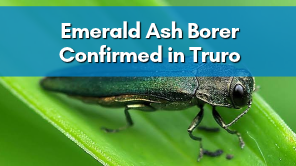
Emerald Ash Borer Confirmed in Truro
- Details
Emerald Ash Borer Confirmed in Truro, Nova Scotia
The Canadian Food Inspection Agency has confirmed the presence of emerald ash borer in the Town of Truro after insects were detected in pheromone traps at two locations within the community.
Emerald ash borer (Agrilus planipennis) is a highly destructive invasive beetle that attacks and kills all true ash species. It has already killed millions of ash trees across North America and continues to spread primarily through the movement of firewood, other infested ash wood products and by way of humans. Adult beetles can also spread naturally by flying short distances.
The Town of Truro anticipated that emerald ash borer would eventually reach the community. In preparation, the Parks, Recreation and Culture Department, in partnership with the Urban Forest Committee, has been proactively planting alternative tree species in place of ash. The Town has also been increasing species diversity in areas where ash trees are present, including locations such as the Mount Pleasant boulevard green space and Victoria Park.
Green ash and white ash are the most common ash species in Truro. However, ash trees make up only a small portion of our community’s urban forest canopy—approximately 2% to 3% of publicly owned and boulevard trees.
There has never been a successful eradication of emerald ash borer once it becomes established. Since its initial detection in North America in 2002, the insect has caused widespread ash tree mortality in both Canada and the United States.
All true ash species are vulnerable to infestation. Without active management, municipalities can expect to lose most ash trees within 10 to 12 years of the first infestation.
Residents can help slow the spread by not moving firewood, ash logs, branches, wood chips, or other ash materials from affected areas. Replacing infested ash trees with non-ash species is also an important part of long-term urban forest management.
Chemical treatments are available and may help protect individual ash trees in the short term, but they are not a cure.
The Town of Truro will remove ash trees infected with emerald ash borer as symptoms appear. This includes infected ash trees on municipally owned property and trees that encroach on the public right-of-way.
Ash trees located on private property remain the responsibility of the property owner. Property owners are encouraged to monitor ash trees for signs of decline and to seek professional advice if they suspect emerald ash borer may be present.
Signs of Emerald Ash Borer may include:
- Thinning or dying tree canopies
- Yellowing leaves and branch dieback
- Increased woodpecker activity
- D-shaped exit holes in the bark
- S-shaped galleries beneath the bark

Truro Farmers Market Hose Tower
- Details
The Town of Truro is working closely with Truro Farmers’ Market staff and the Board of Directors to plan the removal of the hose tower at the Market Hall, following a demolition order based on a structural engineering assessment.
The assessment determined that the tower needs to be removed down to the roofline of the Market Hall. Planning is underway to complete this work in the new year, with ongoing communication between the Town and the Market to coordinate timing and minimize disruptions to vendors, customers and market operations.
Further details about timing and potential impacts will be shared as plans are finalized.
The Town will continue working with Market staff and the Board of Directors to keep vendors and visitors informed as plans move forward.
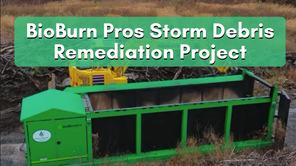
BioBurn Pros Storm Debris Remediation Project
- Details
Location: Water Treatment Plant Road
Anticipated start: The week of October 19, 2026.
The Town has contracted BioBurn Pros to remediate accumulated clean wood waste resulting from Hurricane Fiona. The debris is located at the Water Treatment Plant Road site off Young Street.
Equipment mobilization is expected to take place this week and next week, with processing planned to begin on or after October 19, 2026.
The project involves the controlled, on-site processing of clean wood waste using an air curtain burner. This technology provides an alternative to conventional open burning and can significantly reduce the volume of material requiring disposal.
How the technology works
An air curtain burner uses high-pressure air to support intense combustion. This helps reburn smoke and particulate matter during the process, reducing emissions compared with conventional open burning.
The process can reduce the original volume of brush and wood waste by approximately 98 percent, leaving a carbon-rich material known as biochar. Biochar can have potential uses as a soil additive, helping improve soil quality, contribute nutrients and support moisture retention.
This approach offers an alternative to transporting large volumes of storm debris to landfill while creating the potential for a useful byproduct. The recovery and reuse of biochar from this specific project would need to be confirmed.
Why is the Town undertaking this work?
The project supports three main objectives:
1. Wildfire risk reduction: Addressing accumulated combustible material near community infrastructure, neighbouring First Nation lands, residential communities and Victoria Park.
2. Waste diversion: Diverting thousands of tonnes of organic material from landfill and reducing the volume of waste requiring disposal.
3. Sustainable waste management: Applying an alternative processing method to storm-related wood waste, with the potential to create a useful byproduct.
