


01
|
03

Civic Square Webcam
Town Events

Accessibility Tools
 Town of Truro

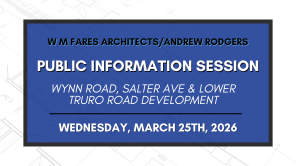
W M Fares Architects/Andrew Rodgers will be hosting a Public Information Session/Open House to
...

INFORMATION BULLETIN NOVA SCOTIA’S NEW ENERGY BUILDING CODES
What’s new?
Nova Scotia is adopting

Have Your Say: Community Vote to Name Ford Street Park
The Town of Truro, in partnership with the African
...
Approval Notice - 46/48 Ford Street & 22/38 Rexdale Drive
Pursuant to the Municipal Government Act,
...
Take notice that Town Council will hold a public hearing to consider and, if deemed appropriate, approve the
...
Pursuant to the Municipal Government Act, notice is hereby given that on February 2, 2026, Town
...
Take notice that Town Council will hold a public hearing to consider and, if deemed appropriate, approve the
...


Flooding has long been a significant challenge for the Town of Truro due to its geography, river systems, and history of development within flood‑prone areas. To better understand these risks and support informed decision‑making, the Town commissioned a comprehensive Flood Risk Study, completed in 2017 by CBCL Limited.
The Flood Risk Study provides a detailed, science‑based assessment of flooding in Truro, examining the causes, extent, and impacts of riverine and storm‑related flooding. It builds on historical flood records and modern hydrologic and hydraulic analysis to identify areas at risk and to improve the Town’s understanding of how flooding affects people, infrastructure, and the community as a whole. While flooding cannot be entirely prevented, the study emphasizes that proactive planning and mitigation can significantly reduce risk and improve public safety.
The findings of the Flood Risk Study form an important foundation for long‑term flood mitigation, land‑use planning, emergency preparedness, and infrastructure investment in Truro. By making this study publicly available, the Town aims to increase awareness of flood risk and support a coordinated, informed approach to managing flooding now and into the future.

Regional Accessibility Advisory Committee
The purpose of the Regional Accessibility Advisory Committee is to provide advice to the Municipal Councils and Village Commissions on identifying, preventing, and eliminating barriers to persons with disabilities in local government programs, services, initiatives, and facilities. The Committee also supports efforts to help the regional communities of Colchester become accessible and meet the obligations under the Nova Scotia Accessibility Act.
Membership of the Regional Advisory Committee shall be comprised of one elected official from each of Truro, Stewiacke, Bible Hill, Tatamagouche, and Colchester, along with a minimum of six additional persons. As required under the Act, at least 50% of committee members must self-identify as having a disability or be representatives of organizations that advocate for persons with disabilities, as appointed by Council.
pdf Truro-Colchester + You. Moving Accessibility Forward Plan(21.73 MB)
The Truro-Colchester + You: Moving Accessibility Forward Plan outlines accessibility improvements across the Truro-Colchester Region. Developed in partnership with the Regional Accessibility Committee, the plan was informed by research and community feedback collected by reachAbility, with the goal of capturing the broad spectrum of disabilities and intersectional barriers. The plan includes recommendations for municipalities and villages in six key areas: Employment, Transportation, Built Environment, Information and Communication, Goods and Services, and Awareness and Capacity Building.
2025 Regional Accessibility Plan
In alignment with the Nova Scotia Accessibility Act, the Regional Accessibility Committee, in collaboration with consultant Left Turn Right Turn Ltd. and regional partners (Village of Bible Hill, Municipality of the County of Colchester, Town of Stewiacke, and Village of Tatamagouche), completed a comprehensive review and update of the 2022 Regional Accessibility Plan.
The updated plan was reviewed by the Regional Accessibility Committee at its February 27, 2025, meeting and presented by the consultant to all participating Councils and Commissions during a regional virtual meeting on March 10, 2025.
All participating municipalities and villages have expressed their support for the updated plan.
Approved by Town of Truro Council on April 7, 2025.
pdf 2025 Regional Accesibility Plan (2.88 MB)

The Town of Truro has been working with the Nova Scotia Department of Natural Resources and Renewables and the citizens of Truro since 2017 to build a strategy to help control the urban deer population in the Town. In early 2021, the Town of Truro formed the Deer Management Working Group to develop a Deer Management Strategy for the Town. The Town’s Deer Management Strategy is an important step toward providing a clear and coordinated approach to deer control within the Town of Truro.
Town Council approved the Deer Management Strategy in September 2021. At that time Council also approved proceeding with an Implementation Plan for a Controlled Managed Hunt to take place within the Town of Truro. A Controlled Managed Hunt was considered to be the most favourable population reduction method, in terms of effectiveness, feasibility, public cost, capacity and time to implement.
The first Controlled Managed Hunt took place in the Winter of 2022. Annual hunts have taken place since this time and are part of the overall Deer Management Strategy.
The Controlled Managed Hunt program includes partnerships with the Province of Nova Scotia (Department of Natural Resources), Millbrook First Nation, Feed Nova Scotia, and Dalhousie University.
The Controlled Managed Hunt program operates on as little waste as possible. Each year, the Town partners with Feed Nova Scotia to have all meat harvested through the program donated to food banks throughout Nova Scotia. All hides are donated to Millbrook First Nation as part of the program, and other parts of the animal are used for Provincial and National research purposes.
Millbrook First Nation also manages select hunt sites and conducts land-based learning programs for community youth and other members to help preserve knowledge related to ethical harvesting and the processing of deer. The program focused on demonstrating proper field dressing, removing a deer from the forest, and tanning of deer hides.
The purpose of the Town's Deer Management Strategy is to reduce the deer population numbers within the Town of Truro for the benefit of natural ecosystems, and citizen landscapes, reducing Deer-Vehicle Collisions (DVC's), public health concerns, the possible presence of deer predators, and an overall reduction of deer human conflict. While residents will need to learn to live with deer long-term, there are several measures that people can take to assist with deer management efforts in Truro and help to bring the urban deer population within a manageable number. The most important management tool for residents is to stop the feeding of deer within and around the Town.
The approved Deer Management Strategy sets overall goals for mitigating deer-human conflicts and highlights all elements of deer management throughout the Town. This includes management options at the individual level, public education options, as well as population reduction options. Individuals are encouraged to focus on measures on their own individual properties, and the Town will focus on public education and population reduction measures (with oversight and guidance from the Nova Scotia Department of Natural Resources and Renewables).
Residents are encouraged to visit: Hub Connect - Urban Deer Management to read the Town's Deer Management Strategy and learn more about the efforts of the Working Group.
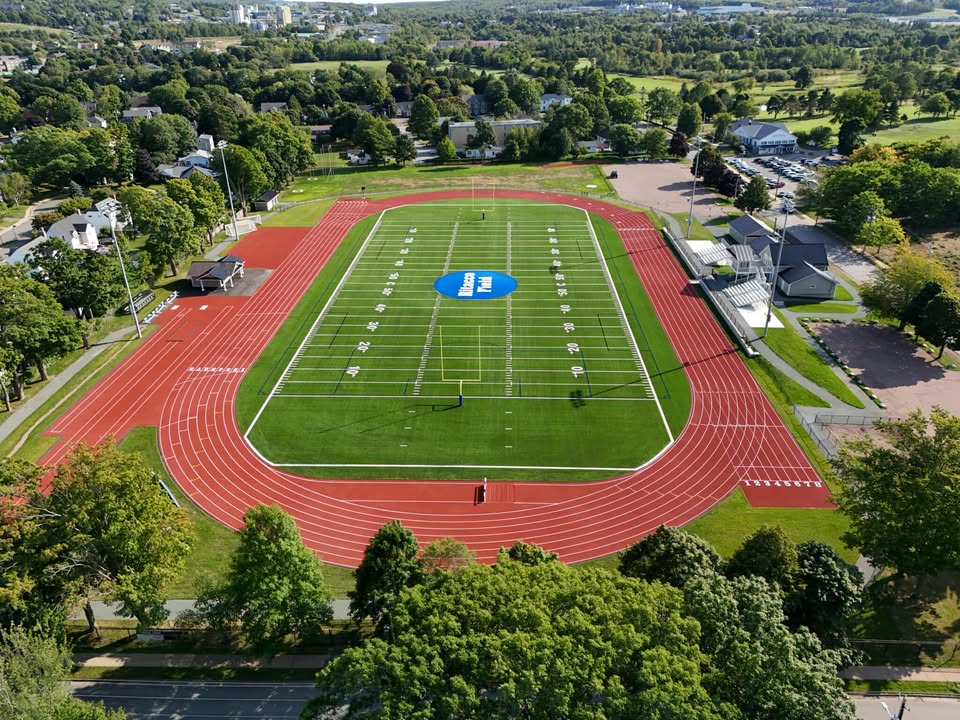 In August 2022, Kody Blois, Member of Parliament for Kings—Hants, on behalf of the Honourable Dominic LeBlanc, Minister of Intergovernmental Affairs, Infrastructure and Communities; Dave Ritcey, Member of Legislative Assembly for Truro—Bible Hill—Millbrook—Salmon River, and Town of Truro, Mayor Bill Mills, announced funding for the revitalization of the Truro Amateur Athletic Club (TAAC), the Multi-Use sport facility and senior baseball facility.
This upgrade saw the renovation of the former TAAC Grounds, which split the former grounds into two different locations. The existing location on Golf Street was revitalized to include a multi-sport, all-weather field and an eight-lane synthetic running track with regulation throwing areas, providing athletes and casual players with a high-quality training facility. This site is now open and renamed, the No. 2 Construction Battalion Athletic Facility.
The seniors’ baseball diamond was relocated to Argus Drive to improve accessibility and was upgraded to reflect championship-quality baseball field standards.
The Government of Canada invested $3.2 million towards the project, while the Government of Nova Scotia provided more than $2.6 million. Locally, the Municipality of the County of Colchester provided $350,000, while the Town of Truro invested $2.6 million. Community donations and sponsorships also exceeded $2.5 million.
Anyone wishing to donate towards this project can stop into Town Hall, 695 Prince Street. All donations to this project are tax-deductible.
The project would not have been possible without the generous support of the community, both through sponsorships and donations.
| 06 Apr 2026; 01:00PM - Public Council Meeting |
| 08 Apr 2026; 07:30PM - 09:00PM Drop-in Adult Badminton / Basketball |
| 15 Apr 2026; 07:30PM - 09:00PM Drop-in Adult Badminton / Basketball |
| 22 Apr 2026; 07:30PM - 09:00PM Drop-in Adult Badminton / Basketball |
| 27 Apr 2026; 06:00PM - Planning Advisory Committee Meeting |


